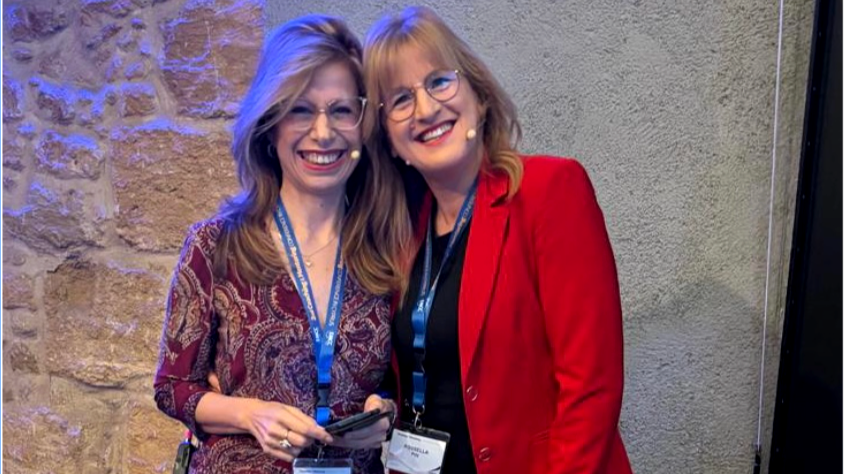

Recently, I had the privilege of hosting a workshop for the Asia Pacific Alliance of Coaches in Kuching. The title (in my head) was Experience, Reflect, Assimilate, Learn, Adapt — a deliberate invocation of a deeper cycle of growth, not just a one-off “training.”
What I witnessed and learned there speaks to something I feel strongly about: in an era obsessed with speed, scale, and automation, human connection remains our greatest lever.
The Paradox of Scale in an AI-Driven World
We are living in times when organizations, leaders, and even us — coaches and mentors — are constantly told: “Don’t miss the opportunity AI gives us to do more, faster, cheaper.”
Yet globally, escalation, polarization, and conflict — even in business — continue to shake peace. Speed without grounded human connection often creates friction, not harmony.
In that tension, I recall a quote from Mother Teresa:
“We ourselves feel that what we are doing is just a drop in the ocean. But the ocean would be less because of that missing drop.”
I take that as permission — to drop my small drop even when the ocean seems vast. To believe that small acts of connection, curiosity, mentoring conversations, and listening can send quiet waves of change outward.
For me, mentoring isn’t about giving answers. It’s about enabling learning conversations. But how do real learning conversations happen?
The Core of Learning: It Has to Be Lived
A key principle I stress in my work is this: we don’t learn from ideas alone; we learn from lived experience.
But even that is not enough. To convert experience into insight, we must reflect, assimilate, test, and adapt.
This is precisely the logic behind Kolb’s Experiential Learning Cycle: concrete experience → reflective observation → abstract conceptualization → active experimentation.
In Kolb’s language, we talk about grasping and transforming experience. The “grasping” may come via direct involvement (doing, feeling) or via intellectual understanding (listening, reading). That initial grasping is fundamental — it gives us the raw material to reflect upon. Without it, reflection or conceptualization is a thin exercise.
In Kuching, I deliberately designed parts of the workshop to create shared experiences — living live my new Supervision Model, built on learning theories. That was our concrete experience.
Then we paused. We reflected. We challenged. We deepened. This reflective observation is vital: noticing tensions, surprises, what moved us, and where we felt resistance.
From reflection, we made sense — pulling out principles, visual metaphors, models, and connections. That was abstract conceptualization.
Finally, participants committed to experiments — small actions to test new approaches in their coaching practice. That was active experimentation — which in turn becomes new experience. And the cycle continues.
Why In-Person Matters (Even in a Remote Age)
Yes, you know me: I’m a fan of online and remote work. Yet I gift myself (and my team) the opportunity to attend at least a couple of conferences per year.
Why? Because some dimensions of human connection cannot fully translate into pixels.
Meeting in person allows us to grasp intangible elements that enrich and complete our perception of the human connection. And from that foundation, learning conversations go deeper.
In Kuching, I noticed moments in “unprogrammed time” — coffee breaks, hallway walks, shared meals — that sparked the richest insights. Some breakthroughs didn’t happen in the session, but around it.
That’s the beauty of cultivating connection: you never know where the learning will bloom.
From Mystery to Commitment: My Takeaways & Invitations
Here are a few reflections I carry forward from this workshop:
- Learning is never linear, but cyclical. Don’t rush to “apply” before reflecting; don’t overanalyze before doing. Let people pass through the full cycle in a safe container.
- Small drops matter. That mentoring conversation, the question you ask, the invitation to pause — all are meaningful, even if their impact feels subtle. Be mindful of who you naturally connect with and why.
- Design for both structure and serendipity. Build in structured learning time, but leave room for informal, unplanned connection. Allow space for mystery — that’s often where the magic emerges.
- Commit to meaningful in-person touchpoints. The investment is worth it only when connections are intentional, and not transactional. Always question your purpose.
- Encourage experimentation. After the workshop, I asked participants: “What is one learning you’ll experiment with in your coaching practice tomorrow?” Small experiments accumulate into learning over time.
- Mentor with humility and curiosity. You don’t need to have all the answers. Your role is to understand their needs, expand their thinking, and invite them to experiment.
⠀
Final Thoughts
In a world racing toward automation and scale, human connection is not a ‘nice to have’ — it is the soil in which deeper growth, trust, creativity, and resilience flourish.
My workshop in Kuching was one more drop in the ocean of what we must keep cultivating: experiential, relational, reflective learning.
I’ll continue dropping my small drops — and I invite you to drop yours too.
Let’s ask ourselves: How might we create more intentional connections, more learning conversations, and more space for reflection, even in our busyness?
I’ll share more about the mystery of connectedness as a vehicle for learning at the EMCC Conference in Florence.
And if you want to discover my new Supervision Model, join one of the monthly supervision sessions: 📩 academy@mentorlabgroup.com